
What You’ll Learn
- What Bid and Ask mean
- Why buyers and sellers show different prices
- What the Spread is and how to calculate it
- Why the Spread matters when buying and selling
- What beginners can easily misunderstand about the two prices
Key Takeaways
- Bid is the highest displayed buying offer: the most a buyer is willing to pay.
- Ask is the lowest displayed selling offer: the least a seller is willing to accept.
- The Spread is the gap between Ask and Bid.
- An immediate purchase is usually compared with the Ask; an immediate sale with the Bid.
- A bigger gap can make buying and selling more costly. Displayed prices do not guarantee execution.
Imagine this
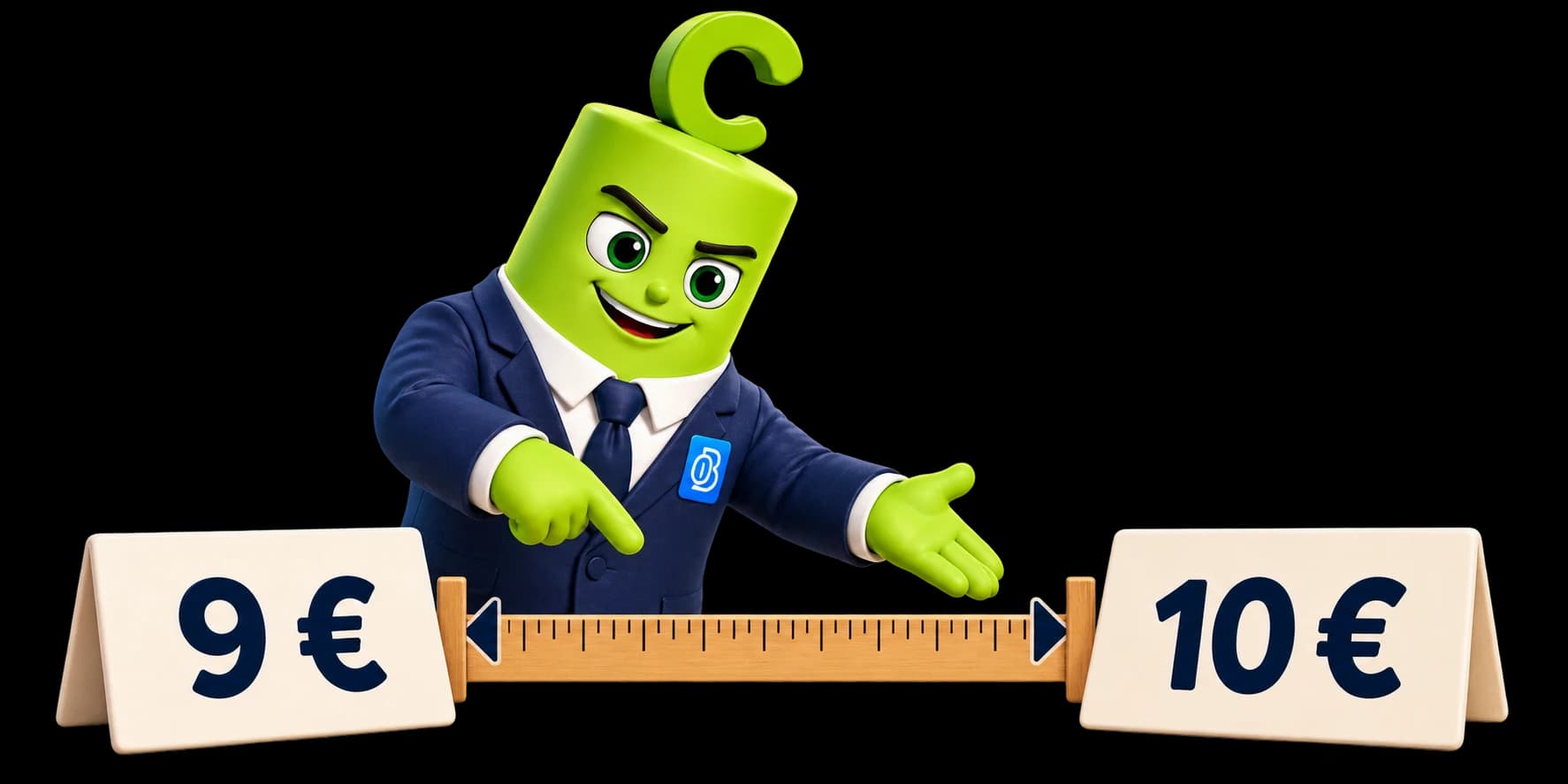
You have a toy you would like to sell. You want €10 for it. Next to you is a child who would like to buy it. They offer you €9.
You say, “I want €10.” The other child says, “I want to pay €9.” So the toy has two prices right now: a price someone is willing to pay, and a price someone wants to receive.
Trading has these two prices, too. They are called Bid and Ask.
What do Bid and Ask mean?
These two words describe the two sides of a possible trade. Buyers make bids. Sellers show the price they would like to sell for.

Bid: what buyers offer
Bid is the highest displayed price a buyer is currently willing to offer for something. In our toy example, the other child offers €9. That is the Bid. You could sell the toy at that price if your offer is accepted and the displayed quantity is available.
Ask: what sellers ask for
Ask is the lowest displayed offer from a seller. You ask €10 for your toy. That is the Ask. A buyer could buy it at that price if they agree to your offer.
Put simply: Buyers make a Bid. Sellers ask an Ask. The English words may sound unfamiliar, but the idea is simple: one side wants to buy, and the other side wants to sell.
Why are there often two prices?
Because buyers and sellers do not always have the same price in mind. The buyer thinks, “I don’t want to pay more than €9.” The seller thinks, “I don’t want to receive less than €10.”

Both can wait to see whether someone accepts their price. Or one person can change their offer. On an exchange, many buyers and sellers do this. The displayed prices show what they are currently offering or asking for a certain quantity.
Displayed prices and available quantities can vary depending on the venue and product. Sometimes you’ll also see a midpoint between Bid and Ask. With a €9 Bid and a €10 Ask, that midpoint would be €9.50. For now, it is just a calculation. It does not automatically mean you can buy or sell immediately at €9.50.
What is the Spread?
The Spread is the gap between Bid and Ask. In our example, the buyer wants to pay €9 while the seller asks for €10. There is a €1 gap between those two prices.
Bid
€9
A buyer offers €9
Ask
€10
A seller asks for €10
Spread
€1
The gap between them
Here’s how to calculate it:
Ask − Bid = Spread €10 − €9 = €1
The Spread is not an extra price that someone sets on top. It simply describes the gap between the highest displayed buying offer and the lowest displayed selling offer.
Why can the buying price be higher than the selling price?
Think of the toy again. If you want to buy it, you need a seller who is willing to part with it. The lowest displayed price for that is the Ask: €10. If you want to sell it, you need a buyer. The highest displayed offer is the Bid: €9.
That is why the price you can buy at immediately is often higher than the price you can sell at immediately. You are meeting different offers from buyers and sellers.

Let’s assume the toy really trades at the displayed prices and nothing else changes. You buy it at the €10 Ask and want to sell it again straight away. But the highest displayed price a buyer is offering is only €9. You would receive €9 when you sell, even though you just paid €10.
€10 paid − €9 received = €1 difference
In this simplified example, the difference equals the Spread. Fees and price changes are not included.
Trading can work in a similar way. If you buy something at the Ask and sell it immediately afterwards at the Bid, the gap between the prices can weigh on your result. The market would first have to move in your favour to make up that gap. How much movement is needed also depends on the product and any other costs. Whether you can actually buy or sell at a displayed price depends, among other things, on available offers, quantity and execution.
Why does the Spread matter in trading?
The Spread helps you see how far apart the displayed buying and selling prices are. Imagine two similar toys. For one, the buying and selling prices are only 5 cents apart. For the other, they are a whole euro apart. Those are different gaps, and they can make a difference when you buy something and sell it later.
A tight Spread
Bid and Ask are closer together. The price gap is smaller.
A wide Spread
Bid and Ask are farther apart. Switching immediately between buying and selling may then be affected more by the price gap.
The size of the Spread can change. There may be more or fewer buyers and sellers. The product being traded, the venue and current market conditions can also matter. That is why a Spread is not a fixed feature of a security.
A trading example
Imagine a share shows these example prices:
Bid€49.80
Ask€50.20
Spread€0.40
These figures are a simplified example, not current market data. The gap is 40 cents per share.
For options, Bid and Ask can also appear in an options chain. The displayed premium often refers to one unit of the underlying; the amount for a whole contract can differ because of its contract multiplier. To get started, it is enough to recognise which price is the Bid, which is the Ask, and how large the gap between them is.
What beginners often misunderstand
“The price on screen is the price I can definitely trade at.”
Not necessarily. A displayed Bid or Ask shows a current offer. The quantity may be limited, and the price can change before your order is filled. A visible quote is not a guarantee that a trade will be executed.
“The last traded price is the same as Bid or Ask.”
Not always. The last price shows the price at which a trade happened earlier. Bid and Ask may have changed since then. So the last trade is not automatically a price at which you can buy or sell right now.
“The midpoint is definitely available.”
The midpoint between Bid and Ask is a calculated value. With a €9 Bid and a €10 Ask, it is €9.50. That does not mean a buyer or seller has to accept an offer at that price.
“Spread always means the same kind of cost.”
The Spread shows the gap between displayed prices. That gap can affect your result when you trade. But it is not always a separate fee paid to one specific place. Other costs may also apply, depending on the product and provider.
The most important rule
When you see Bid, Ask and Spread, first ask yourself: Which price belongs to buyers, which belongs to sellers, and how big is the gap?
Buyers make a Bid.
Sellers ask for an Ask.
The gap between them is the Spread.
Then you know whether you are looking at the highest displayed buying offer, the lowest displayed selling offer, or just a midpoint.
Glossary
- Bid
- The highest displayed buying offer: the price a buyer is currently willing to pay at most.
- Ask
- The lowest displayed selling offer: the price a seller is currently willing to accept at least.
- Spread
- The gap between Ask and Bid. Calculation: Ask minus Bid.
- Midpoint / Mid
- The calculated midpoint between Bid and Ask. It is not automatically an executable buying or selling price.
- Last price / Last
- The price of the most recently displayed trade. It may no longer match the current Bid or Ask.
One-sentence summary
Bid is the highest displayed buying offer, Ask is the lowest displayed selling offer, and the gap between them is the Spread.
Keep learning about Bid, Ask and Spread
Now you know the two prices and the gap between them. In the BeInOptions Academy, you can continue learning how to find these values in an options chain.
Visit the Academy